Lightweight 540 V Screw Compressor Airend for Electric Buses GCU11
540 V motor option | 35 percent volume reduction | noise at or below 75 dB(A) | 55 kg integrated block
24 V and 540 V motor options35% smaller volumeLow energy consumptionIATF 16949 automotive quality
Product Summary
This GCU11 variant is configured for battery-electric buses, coaches and heavy trucks, where every component competes for the energy budget and the chassis has no spare space. The 9-in-1 block combines airend, oil-gas separator tank with built-in coarse separator, three filter positions and four valves in a 55 kg body of 378 x 350 x 415 mm, a 35 percent volume reduction against a conventional airend arrangement. A 540 V motor option is available alongside 24 V, matching the traction and auxiliary voltage used on electric buses. Noise stays at or below 75 dB(A) and delivery is 0.6-1.0 m3/min at 7 bar across a 4-7.5 kW range with 5 to 16 bar working pressure.
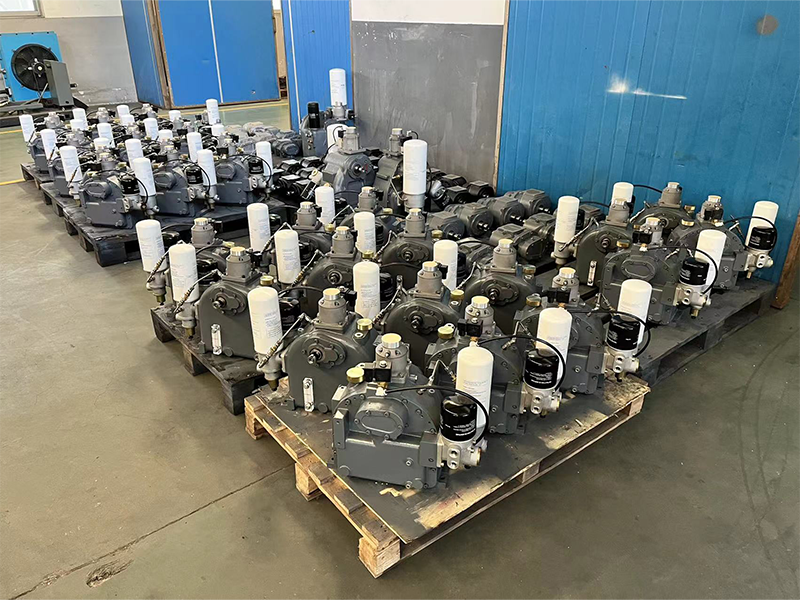
Lightweight GCU11 block configured for electric bus air systems.
Key Features
540 V motor option
24 V and 540 V motor options are available, so the airend can be driven from the voltage available on the electric bus or truck platform.
35 percent volume reduction
Integrating tank, filters and valves into one body shrinks the installed envelope by 35 percent, freeing chassis space for battery packs.
Low energy consumption
The on-demand intermittent start-stop duty with energy-saving control keeps consumption inside the strict energy budget of electric buses.
Noise at or below 75 dB(A)
Low noise output allows the block to sit closer to passenger areas without additional acoustic cladding.
55 kg integrated block
One body of 378 x 350 x 415 mm carries the separator tank, three filters and four valves, cutting hose runs and leak points on the chassis.
Automotive-grade quality
Production runs under IATF 16949 automotive quality management with ISO 9001:2015 certification from SGS and CE certification for the airend range.
Technical Specifications
Model
GCU11 electric vehicle configuration
Motor options
24 V / 540 V
Volume reduction
35 percent against conventional airend arrangement
Noise
At or below 75 dB(A)
Power
4-7.5 kW
Speed
2900-6500 rpm
Free air delivery at 7 bar
0.6-1.0 m3/min
Working pressure, max / min
16 / 5 bar
Max discharge temperature
105 C
Oil carry-over
Below 2 ppm (design at or below 3 ppm)
Net weight
55 kg
Dimensions (L x W x H)
378 x 350 x 415 mm, excluding air filter assembly
Housing / rotors
High-grade cast iron housing, forged alloy steel rotors with UV patented profile
Bearings / shaft seal
SKF heavy-duty rolling bearings, triple-sealing technology
Models and Options
Electric vehicle configurations are chosen by platform voltage, available chassis volume and the air consumers to be supplied: braking, door actuation or air suspension. The block is matched with a motor controller, air dryer and DC-AC inverter in the vehicle architecture, and the 540 V option removes the need for a separate step-down arrangement on high-voltage platforms. Power selection stays within 4-7.5 kW. A high-pressure variant up to 30 bar for fuel cell and electric machinery air supply is under evaluation.
Confirm the platform voltage and the air consumer list during inquiry, so the motor option, pressure setting and dryer arrangement are fixed together.
Materials and Structure
The housing is high-grade cast iron, with an aluminium-alloy version under development. Screw rotors are forged alloy steel with the German-designed UV patented profile, machined over more than 20 precision steps to micron-level accuracy and carried in SKF heavy-duty rolling bearings. The shaft seal uses triple-sealing technology and oil separation runs through a built-in coarse separator plus an oversized external fine separator. Four valves and three filter positions are integrated into the same casting, which is what delivers the 35 percent volume reduction in the chassis.
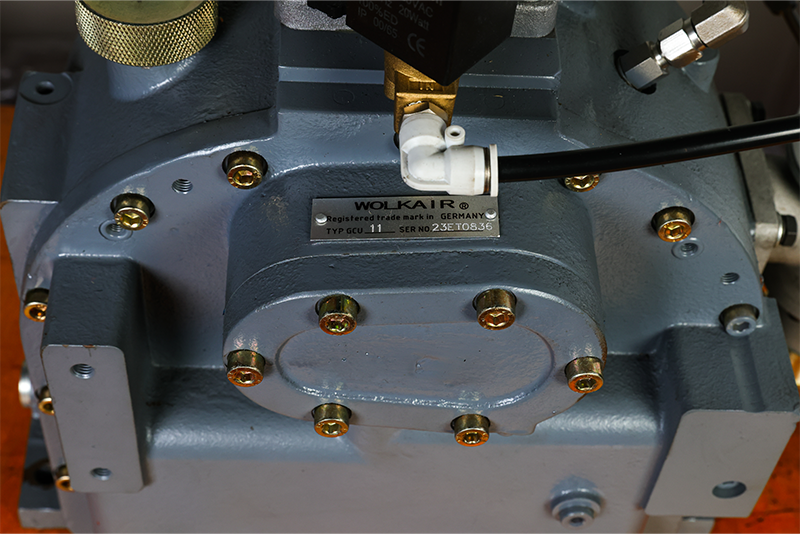
Mounting side of the integrated GCU11 block for chassis installation.
Applications
Electric bus braking, door actuation and air suspension
Battery-pack ground clearance control through ride-height adjustment
Electric heavy truck air systems
Electric mining truck air supply
Fuel cell commercial vehicle air supply, where a high-pressure variant is under evaluation
Customization
Platform integration is agreed around the vehicle harness and the chassis envelope: motor voltage option, port orientation, pressure setting and the interface to the air dryer and valve block. Drawings are provided for the vehicle build, and the block can be specified with or without the optional air filter. Buyers planning fuel cell or electric machinery applications can register interest in the high-pressure variant that is currently under evaluation.
Case Study
A new energy vehicle OEM has taken approximately 1,500 units per year for three years for electric bus braking, door actuation and air suspension. The lightweight block and low energy consumption meet the strict energy budget of electric buses, the 35 percent volume reduction leaves space for battery packs, noise is held at or below 75 dB(A), and the 540 V motor option matches the high-voltage platform.
FAQ
Which motor voltages are available?
Both 24 V and 540 V motor options are offered. The 540 V option is the one used on high-voltage electric bus platforms in the new energy vehicle programme.
How much space does the block save?
The 9-in-1 integration reduces volume by 35 percent against a conventional airend arrangement, in a body of 378 x 350 x 415 mm at 55 kg net weight.
How does the unit affect the vehicle energy budget?
The block runs on-demand intermittent start-stop duty with energy-saving control, and low energy consumption is the reason it was selected for a programme taking approximately 1,500 units per year.
What pressure and delivery are covered?
Delivery is 0.6-1.0 m3/min at 7 bar across 4-7.5 kW and 2900-6500 rpm, with working pressure between 5 and 16 bar and a maximum discharge temperature of 105 C.
What else is matched with the airend in the vehicle?
In the electric vehicle architecture the block is matched with a motor controller, an air dryer and a DC-AC inverter, alongside the air reservoir and solenoid valve block.
Is a higher pressure version planned?
A high-pressure variant up to 30 bar for fuel cell air supply and electric construction machinery is under evaluation. Series availability is confirmed on inquiry.
Which quality standards back the automotive supply?
Production is covered by IATF 16949 automotive quality management, ISO 9001:2015 certified by SGS (certificate CN-ISO9001-WSD-2024-012) and CE certification CE-WSD-GCU-2023-001 from TUV Rheinland.
Inquiry Information
Send the platform voltage, chassis envelope and air consumer list so the electric vehicle configuration can be confirmed.
gcu11-electric-bus-lightweight-block.png | Alt: GCU11 lightweight screw compressor airend for electric bus air systems gcu11-electric-bus-chassis-mounting-side.png | Alt: GCU11 integrated airend viewed from the mounting side for electric bus chassis gcu11-electric-bus-540v-configuration.png | Alt: GCU11 airend with 540 V motor option for high-voltage bus platforms
 ✓ Verified Elite Supplier